Not Every Open Space Needs to Be Filled
Not Every Open Space Needs to Be Filled
One of the strangest things about trying to take better care of ourselves is how easily wellness can become another list of things we’re supposed to accomplish. Get the steps in. Take the walk. Move the body. Eat well. Drink enough water. Get enough sleep. Find time to relax. Before long, even rest can start feeling like something we’re supposed to be good at.
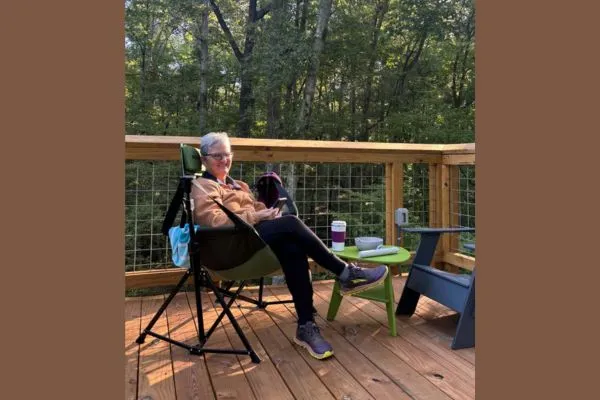
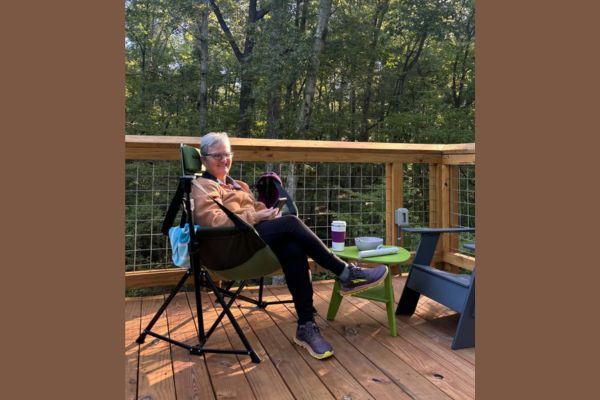
That was on my mind coming home from two nights at Indian Springs State Park in Georgia, one of the nation’s oldest state parks. There were trails we could have walked and places we could have explored, but I didn’t do much of either. Cristina and Corbin took their paddleboards out while I stayed around the yurt. There was no pressure to make sure every hour was filled simply because we had gone somewhere for the weekend, and it felt good.
Not because nothing was happening. There was plenty happening, just not the kind that needed to be planned or checked off a list. The woods were alive with squirrels chasing through the trees, cicadas singing, Canada geese coming in when things quieted down, a pileated woodpecker that was far too much fun to watch, and owls calling back and forth through the trees.
The owls may have been the funniest part. When several get calling back and forth at the same time, they can sound remarkably like monkeys. We had experienced that before at another state park, so the sound wasn’t new, but it still makes me laugh. Saturday morning we watched some of them moving between the trees while others called from farther away. Early Sunday morning, long before my normal waking time, they started up again. There I was, lying in bed listening to what sounded like monkeys carrying on outside and laughing before the day had even started.
What struck me wasn’t how much we did during those two days. It was how little pressure there was to do more. That distinction matters, especially when we’re talking about rebuilding calm and strength.
When Taking Care of Yourself Becomes Another Job
So much of wellness is presented as action. What should you eat? How should you move? What should you take? How many steps should you get? What should your morning routine look like? What should you stop doing, start doing or do more consistently?
Those things can matter. I’ve made plenty of changes in how I support my own body, but there’s another side to supporting ourselves that can easily get overlooked. Sometimes the body doesn’t need another assignment.
Think about how much we carry during an ordinary week. There are appointments, work, family, messages, errands, decisions, responsibilities and all the little things running through our heads that nobody else can see. Even when we finally sit down, the mind can still be moving through everything that needs to happen next. Being physically still and feeling restored aren’t necessarily the same thing.
That weekend made the difference easier to notice. There was a little work mixed in because I recorded a few videos while we were there, but it didn’t take over the weekend. There was room for work and room for everything else. There was also room to look at those trails and decide they could stay right where they were.
Calm Doesn’t Have to Look a Certain Way
Sometimes we make calm too complicated. It can start sounding as though we need the perfect morning routine, the right meditation, an hour of silence or a completely empty calendar before our bodies can settle down.
But calm can look much more ordinary than that. It can be sitting outside long enough to notice what happens when everything gets quiet. It can be watching people you love paddle across the water while you stay behind. It can be hearing something ridiculous in the woods and laughing before you’ve even gotten out of bed.
Saturday evening, it was a campfire. I miss having campfires, and there’s something about sitting beside one that makes me want to stay there. Corbin roasted a hot dog and made a s’more, and later, as the temperature dropped toward 50 degrees, the hoodie went on, the blanket came out, and I stayed outside on the deck until around 10 o’clock.
There was no goal attached to sitting there. Nothing needed to be accomplished. It simply felt good to be outside, wrapped in a blanket beside the fire, enjoying where we were.
How often do we allow ourselves to do something simply because we enjoy it? Not because it checks something off the list, moves the business forward or takes care of somebody else, but because it feels good to be there? For many of us, that question may be harder to answer than it should be.
Recovery Is Part of Strength
When we talk about rebuilding strength, the natural tendency is to think about doing more. More movement, more effort, more discipline, more consistency. Strength does require us to use our bodies, but our bodies also need opportunities to recover from what we ask of them.
The same is true beyond physical movement. Stress asks something of us. Constant decision-making asks something of us. Poor sleep asks something of us. Spending day after day responding to what everyone and everything around us needs asks something of us too. Ordinary responsibilities aren’t bad, but they still carry a load.
If we’re going to talk about rebuilding ourselves from the inside out, we need to pay attention to both sides of that equation. What are we asking our bodies to carry, and where are we giving them room to recover?
That room will look different for everyone. Maybe walking a trail is exactly what restores you. Maybe it’s gardening, reading, music, working with your hands, sitting near water, being around animals or spending time with someone who makes you laugh. The point isn’t that everybody needs to go sit in the woods for a weekend. It’s becoming more aware of what leaves you restored rather than depleted.
There’s a difference between distraction and restoration too. We can scroll for an hour and still feel tired. We can sit in front of the television all evening and still feel wound up. We can have an empty afternoon and fill it with enough little tasks that it never feels empty at all.
Maybe restoration leaves you calmer or more present. Maybe you realize you weren’t thinking about the clock. Maybe you laugh more. Maybe you simply notice that you weren’t rushing.
We spend plenty of time noticing what feels wrong. The painful joint gets our attention. The poor night’s sleep gets our attention. Exhaustion and stress get our attention. Becoming just as curious about what restores us can tell us something too.
Bringing Some of It Home
Of course, weekends end. The bags get packed, the car gets loaded, the yurt gets left behind, and ordinary life starts up again. We only had two nights there, but something doesn’t have to last a week to remind us of what we’ve been missing.
We also don’t have to recreate the entire experience at home for the lesson to matter. There won’t be a deck in the woods every evening, owls probably aren’t going to provide the morning entertainment, and there isn’t always going to be a campfire waiting at the end of the day. But there can still be room to sit outside a little longer, leave something for tomorrow or enjoy something without needing it to accomplish anything.
We spend so much time thinking about what we need to add to become healthier, stronger or more resilient. Sometimes support comes from what we add, and sometimes it comes from what we change. But sometimes it also comes from what we allow ourselves not to do.
There were trails waiting just beyond that yurt. They never got walked, and nothing about the weekend feels unfinished because of it.
I’m Claudette Eames, wellness advocate and certified mental wellness coach. Building a life that genuinely feels good to live, one choice at a time.
Claudette 🌻
Rooted in healing. Grounded in purpose.
Get your free Rooted & Rising magazine


