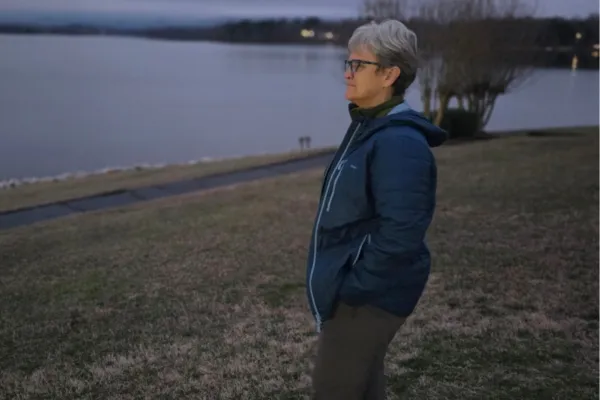
The Braid: When Grief and Joy Walk Together
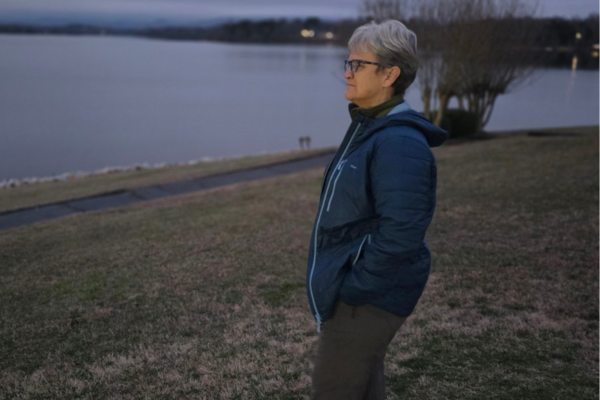
The Braid: When Grief and Joy Walk Together
Rooted & Rising: Widow to Wellness
People who haven’t lived it often think that grief and joy take turns. They imagine that one emotion must leave for the other to arrive, as if your heart is a room with only one chair. For a long time, maybe I thought that, too. I thought that healing meant the grief would shrink and the joy would expand, that eventually, one would replace the other. That is not how this works.
For those of us who have lost someone central to our lives, grief and joy become partners. They show up together, or not at all. The best way I’ve ever heard it described is this: life after loss is braided. It’s three strands, always intertwined. The first strand is grief, the missing, the ache, the constant, quiet knowing of who should be here and who is not. The second is joy real, genuine moments of happiness, laughter, and celebration. And the third strand, the one that holds it all together, is love. Because love didn’t end. Love is why grief exists. And love is why the joy both hurts and heals at the same time.
This year, it will be seventeen years since I lost my husband. The sharp, gut-wrenching pain of those early years has softened, but the braid remains. I feel it most on the milestone days. His birthday. Our wedding anniversary. The birthdays of our children, who have navigated all of their adult years without their father’s guidance. I feel it with a profound ache when I look at my grandsons, these beautiful boys he never had the chance to meet. In these moments, my heart feels two things at the exact same time: the pure, uncomplicated joy of celebrating a life, and the sharp, immediate awareness of the one who is missing.
The joy does not cancel out the grief. And the grief does not erase the joy. They are braided. It’s a reality that can feel isolating, as if you’re speaking a language no one else understands. But you are not alone in this. This is the shared, unspoken truth of anyone who has loved and lost.
For me, the grief strand is the emptiness. It’s the void left by the absence of his physical presence. It’s missing the hugs. It’s the quiet in the house where his conversation used to be. It’s the lack of his companionship, the googly eyes across a room, the easy kisses. It’s watching our children achieve incredible things and knowing how immensely proud he would be, how he would have celebrated them. He missed seeing them grow into the remarkable adults they are today. That is a grief that doesn’t fade; it just changes shape. It’s a quiet ache that lives alongside the pride, a shadow that highlights the brilliance of their light.
But then there is the joy strand, just as real and just as present. It’s the laughter at a family dinner. It’s the pride in my children’s accomplishments. It’s the delight in my grandsons’ antics. It’s the beauty of a sunset, the peace of a quiet morning, the warmth of a friendship. These moments are real. The happiness is genuine. To deny that joy would be to deny the life I am still living, and the love that still surrounds me.
And that’s where the third strand comes in: love. The love I have for my husband did not end when he died. It couldn’t. It’s woven into the very fabric of who I am. I just had to learn to carry that love in a new way. It’s a phrase I hold onto because it’s the truest thing I know. I carry it in the stories I tell about him, keeping his memory alive for his grandsons. I carry it in the way I live my life, striving to honor the dreams we once built together, even as I build new ones on my own. I think about him every single day. That’s not staying stuck; that’s love. It’s a testament to a bond that was so strong, it transcends presence. To stop thinking of him would be a second loss, and that is not a price I am willing to pay.
People who haven’t experienced this kind of loss can experience joy as a single, clean emotion. I don’t get that anymore. My joy limps. Not because it’s weak, but because it’s carrying the weight of this beautiful, heavy braid. Part of me is here, fully present in this world, and a part of me is still somewhere else, with him.
Sometimes, the people around us want our joy to mean that we're "moving on" or "leaving grief behind." That is a misunderstanding. Joy is not the opposite of grief. Love is the reason both exist. I cannot have one without the other. I never will. And that is not a flaw. It is a badge of honor, a testament to the depth of the connection. It is the price of admission for a love that was worth everything. It is the shape of a life that has loved deeply and lost profoundly.
So, what I want you to take away from this is permission. Permission to feel both. It’s okay. You are human. Grief is a part of our life, and we have no control over its presence. You have to continue to live, and you can’t stay stuck in the sorrow. But acknowledging that you are missing someone, that your joy now limps because it’s carrying the weight of a great love that is not staying stuck. That is the bravest, most honest way of walking forward. You walk with a limp now, but you are still walking. And every step you take is braided with the grief, the joy, and the love that makes you who you are.
If this resonated with you…
I send one thoughtful email each week with reflections, tools, and conversations around calm, strength, and building a life that fits.
If you'd like to receive it directly, you can join here:
In support,
Claudette Paulin Eames 🌿
Entrepreneur, Mentor & Certified Mental Wellness Coach
Supporting the mature-age community to rebuild calm & strength one gentle step at a time.


