When Pain Starts Making the Decisions
When Pain Starts Making the Decisions
You can rebuild an entire life and still wake up one day realizing your body has been quietly closing doors.
It rarely happens all at once. You skip the longer trail. You stay closer to the car. You avoid kneeling in the garden or choose the outing that requires less walking. Each decision seems small enough to explain away.
Eventually, those small decisions begin shaping the life you are living.
That was the part I did not recognize right away.
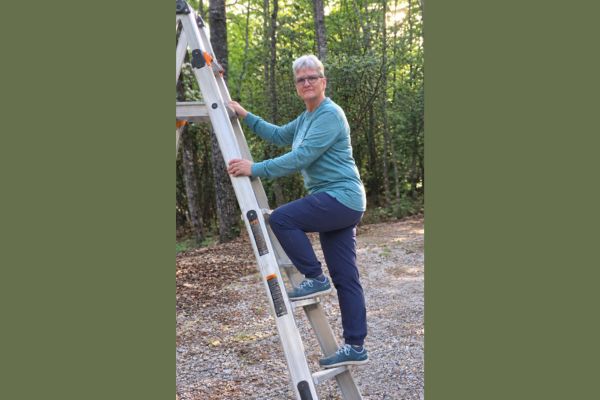
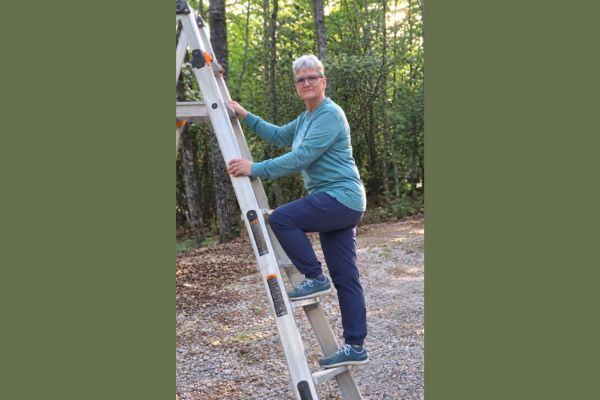
For more than twenty-five years, painting and wallpapering asked something of my body every single day. I climbed ladders, knelt on floors, reached overhead, carried supplies, and repeated the same movements for hours. My body was part of how I earned a living, so I focused on finishing the job rather than wondering what all those years might be costing me physically.
When Jesse died, life did not pause long enough for me to examine any of it. There was work to continue, a house to maintain, bills to pay, and responsibilities that were now mine to carry. Strength meant getting up and doing what needed to be done.
And I did.
Years later, after moving south and building a life I genuinely loved, my body began changing the boundaries of that life. Hiking became something I had to question instead of something I could simply enjoy. Staying home sometimes felt easier than wondering whether my knees would carry me back to the car.
At first, I thought I was making sensible adjustments.
What I did not realize was that pain had started making decisions for me.
That is the part we rarely count.
We notice the walk we stopped taking or the distance we no longer travel, but we do not always notice what happens inside us each time we decide our body cannot be trusted.
Maybe you have made those adjustments too. You choose the chair because getting down on the floor feels risky. You watch from the porch instead of walking the path. You turn down an invitation because you do not know how far you will have to walk or whether there will be stairs.
You may never announce that you have given something up. You simply stop doing it, and after a while, the smaller life begins to feel normal.
There is wisdom in adapting. Paying attention to your body is not weakness, and pushing through pain to prove something is not strength. But there is a difference between making a thoughtful adjustment and quietly surrendering something without asking whether it could become possible again.
That difference can be difficult to see from the inside.
It would have been easy to call it wear and tear and leave it there. Decades of physically demanding work. Maybe this was simply what happened to a body that had been used that hard for that long.
But that explanation did not fit the life I had worked so hard to rebuild.
I had created a life with mountains close enough to explore, places I still wanted to visit, and grandchildren I wanted to keep up with. I had already learned that life could change without asking my permission. I was not willing to let every physical limitation quietly become permanent without paying attention.
Losing Jesse taught me that some realities cannot be changed. His death was one of them. I could not direct my energy toward changing what had happened. I had to place it into learning how to live inside a reality I never wanted.
My body was asking something different of me.
I could not control every ache or guarantee how my knees would respond, but I could stop ignoring what was happening. I could ask questions. I could get help. I could rebuild strength and give myself the opportunity to regain some of what I had surrendered.
That did not begin with climbing a mountain.
It began with recognizing how much of my life I had quietly stopped doing.
Rebuilding movement was gradual. I paid closer attention. I supported my knees, began walking more intentionally, and allowed shorter distances to count. I stopped measuring progress against what I had once been able to do and started noticing what was becoming available to me again.
Confidence did not return before I moved. It returned because I moved.
Each walk became a small piece of evidence. My body could still respond. Strength could still be built. A difficult day did not erase every good one, and modifying something did not mean I had failed.
Capacity became the measurement.
Could I walk a little farther without worrying about the return? Could I spend time in the woods and enjoy where I was instead of calculating every step? Could I say yes to something that I had been quietly avoiding?
Those questions mattered more than speed, distance, or proving that I could still do what I did years ago.
This is where the body and the life stop being two separate things. Movement affects more than muscles and joints. It influences where we go, what we accept, how we connect with others, and whether we trust ourselves enough to say yes.
When your body begins closing doors, confidence often slips through with it.
But recognizing that pattern gives you somewhere to begin.
Look at the choices you are making around your body without criticizing yourself. What have you stopped doing? When did you stop? Was the decision based on what is true today, or on what happened the last time you felt pain, weakness, or uncertainty?
The answer may not be to push harder. It might be a shorter route. A different kind of movement. More rest. A slower return than you want.
There is no promise that every door will reopen. Bodies change, and some limitations are real. But we deserve an honest look before allowing pain or fear to decide that every meaningful part of life is over.
Rebuilding movement is not about proving anything. It is about having a life I want to participate in.
That life includes trails, travel, time with my family, and the freedom to follow curiosity when it leads somewhere beyond the parking lot.
Your reasons may look completely different. What matters is whether your body is supporting the life you want or quietly determining how small that life is allowed to become.
Where has your body been making decisions for you?
And what might become possible if you began paying attention before another door quietly closed?
If those questions landed close to home, the rest of the story is in my free magazine. What twenty-five years on ladders cost my body, why the gut, brain and joints work together instead of separately, and a written timeline of the first ninety days as it happened. You can read it at claudetteeames.com/magazine.
I'm Claudette Eames, wellness advocate and certified mental wellness coach. Building a life that genuinely feels good to live, one choice at a time.
Claudette 🌻
Rooted in healing. Grounded in purpose.


